Filling Out Your Timesheet
Each week, you enter your hours in a timesheet, then sign it to send it to your manager. This article walks you through both steps.
How to Fill Out Your Timesheet?
Where to Find Your Timesheets?
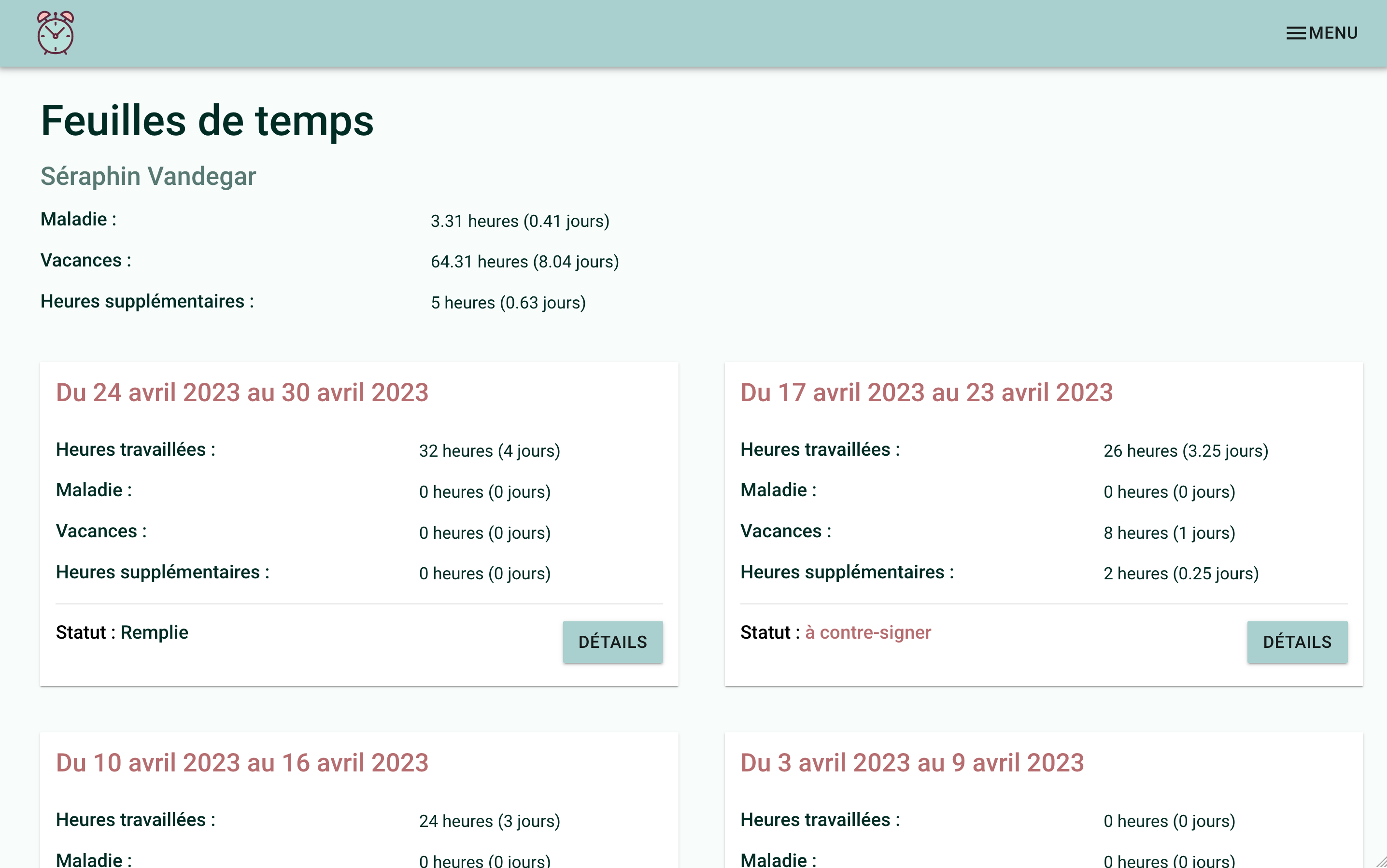
When you log in, you land directly on your timesheets. Each week has its own card, with a status: empty, to be signed, or to be countersigned.
The summary of your hour banks appears at the top of the page.
How to Open a Timesheet?
Click the "Details" button for the week you want.
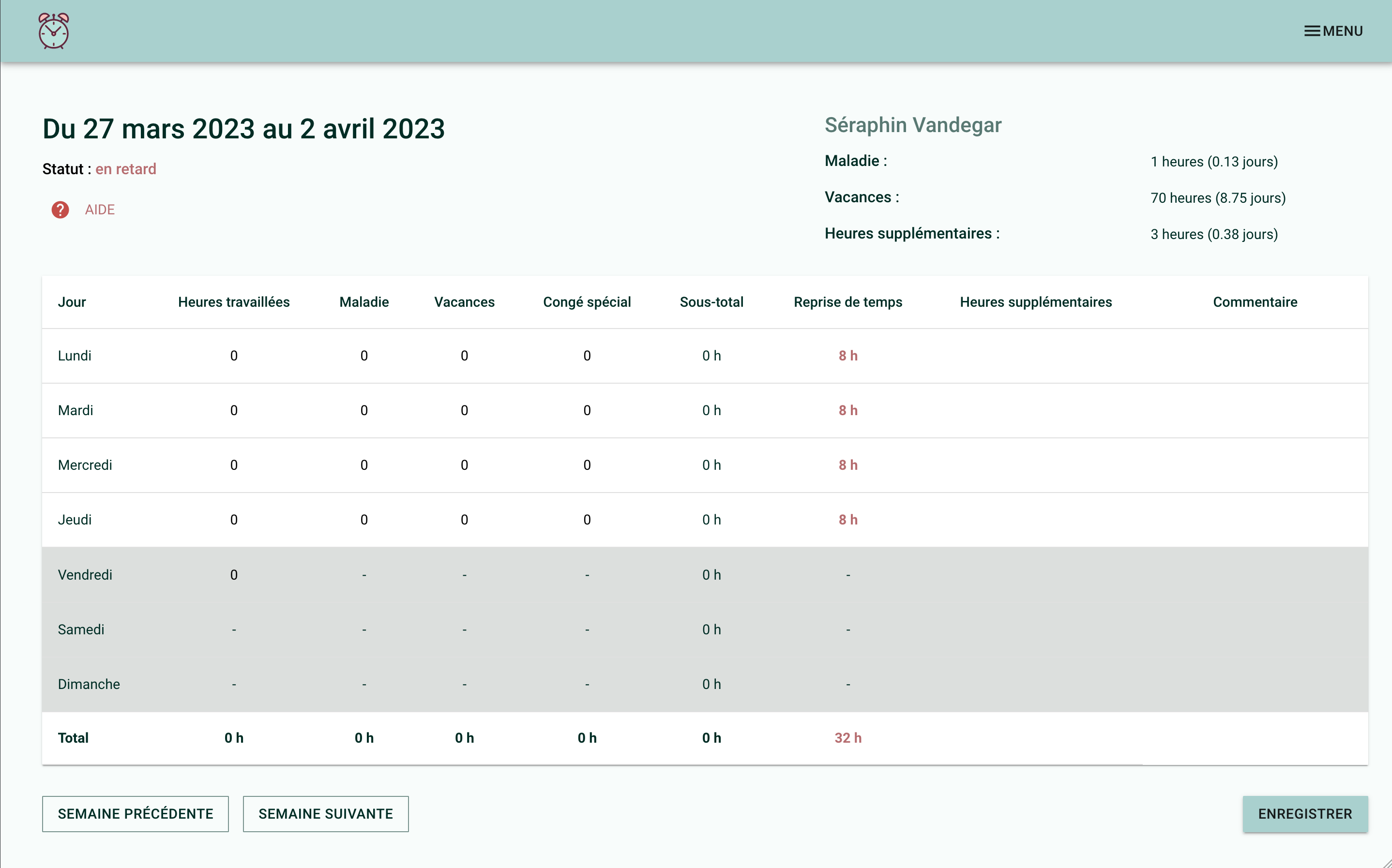
One row per day, and you fill in the fields that apply to you:
- Worked hours: the number of hours worked that day
- Sick: the number of sick hours taken that day
- Holiday: the number of holiday hours taken that day
- Family leave: the number of family leave hours taken that day
If your organization has turned on a second bank of specific leave days, one more column appears, under the name it gave it, and fills in the same way.
The subtotal calculates itself, row by row, and the week's total appears at the bottom of the table.
For half hours and quarter hours, use a decimal point or comma.
For example, 7:30 is written 7.5, and 7:15 is written 7.25.
Your timesheet may include other columns than the ones described here: they depend on what your organization has configured. If you're unsure about one of them, ask your manager.
Why Are Some Rows Grayed Out?
A grayed-out row is a day when you don't need to enter hours:
- weekends;
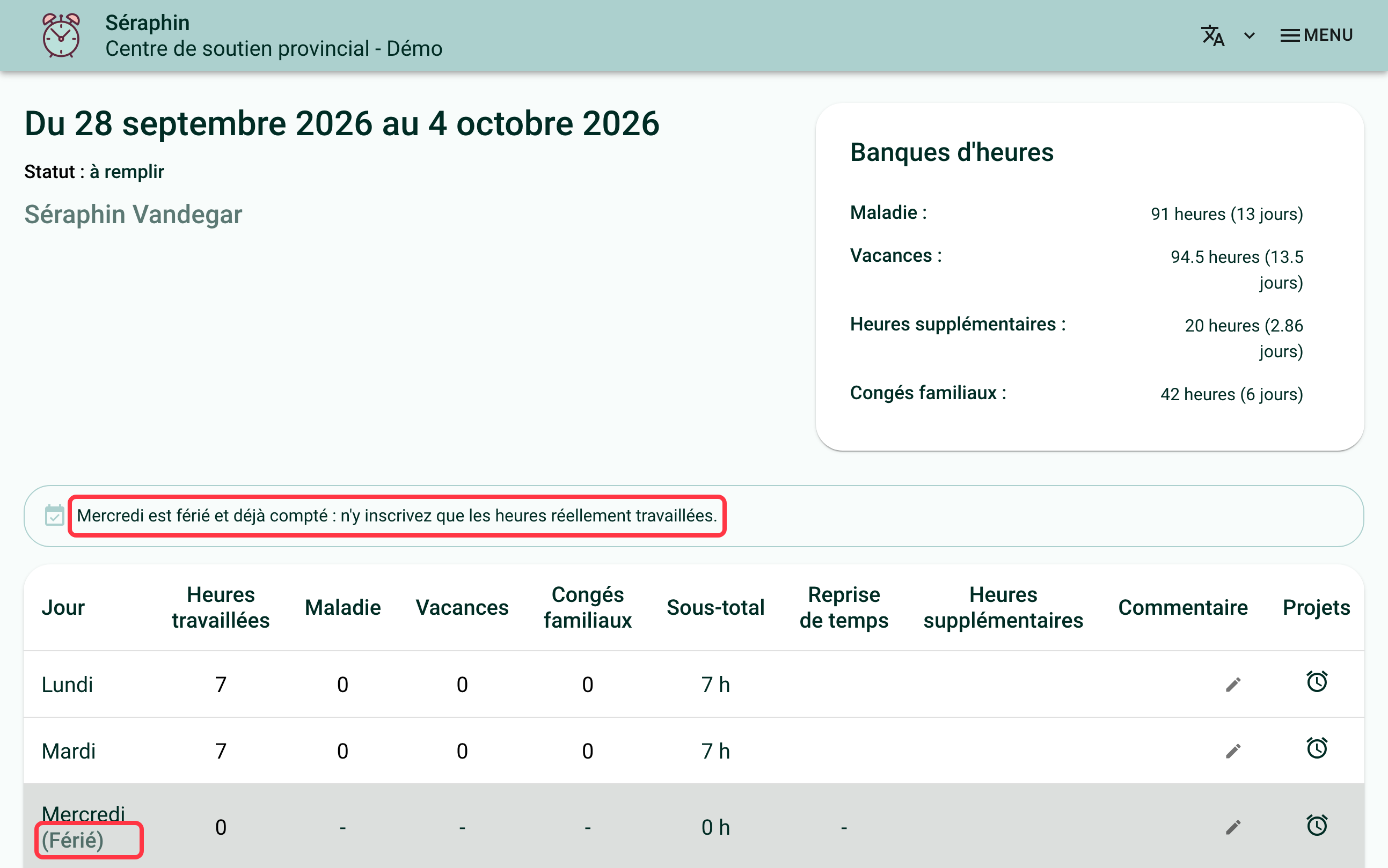
- public holidays, marked with "(Public holiday)" after the day's name;
- your days off, if you work a reduced schedule;
- days outside your tracking period, for example before your first day or after your contract ends.
In this last case, entry is refused: that's normal, these days don't apply to you.
A public holiday is already counted: your week's expected hours drop by one day, without you having to enter anything. If a week contains a public holiday, a sentence above the table reminds you, for example "Wednesday is a public holiday and already counted: only enter hours you actually worked." If you do work that day, enter the hours you actually worked: they are then added to your overtime.
How to Validate Your Timesheet?
Once your hours are entered, click "Save". You can do this as many times as you like, and come back to finish later.
When the week is complete and everything is correct, click "Sign". The status then changes to "to be countersigned", which lets your manager know the timesheet is ready to be validated.
Once the timesheet is signed, its hours can no longer change. To fix a mistake before your manager's review, first click "Un-sign", change your hours, then sign again.
When your manager has countersigned the timesheet, it is locked: only a manager can remove the countersignature. If you find a mistake at that point, write to them.
If your organization chose to show the whole pay period on one page, you see all the weeks of the period one under the other. Each week keeps its buttons, and a "Sign the period" button signs them all at once. If you leave the page with unsaved changes, a window reminds you.
You can move from one week to another without going back to the list, using the "Previous week" and "Next week" buttons.
If you need help with this, write to us at support@feuilledetemps.ca.